
After congress passed the One Big Beautiful Bill Act (OBBBA) in July 2025, hospital and health system executives anticipated significant financial disruption. At the time, Eliciting Insights conducted early market research and discovered an industry in triage mode, with leaders predicting layoffs, service line reductions, and extensive rural hospital closures.
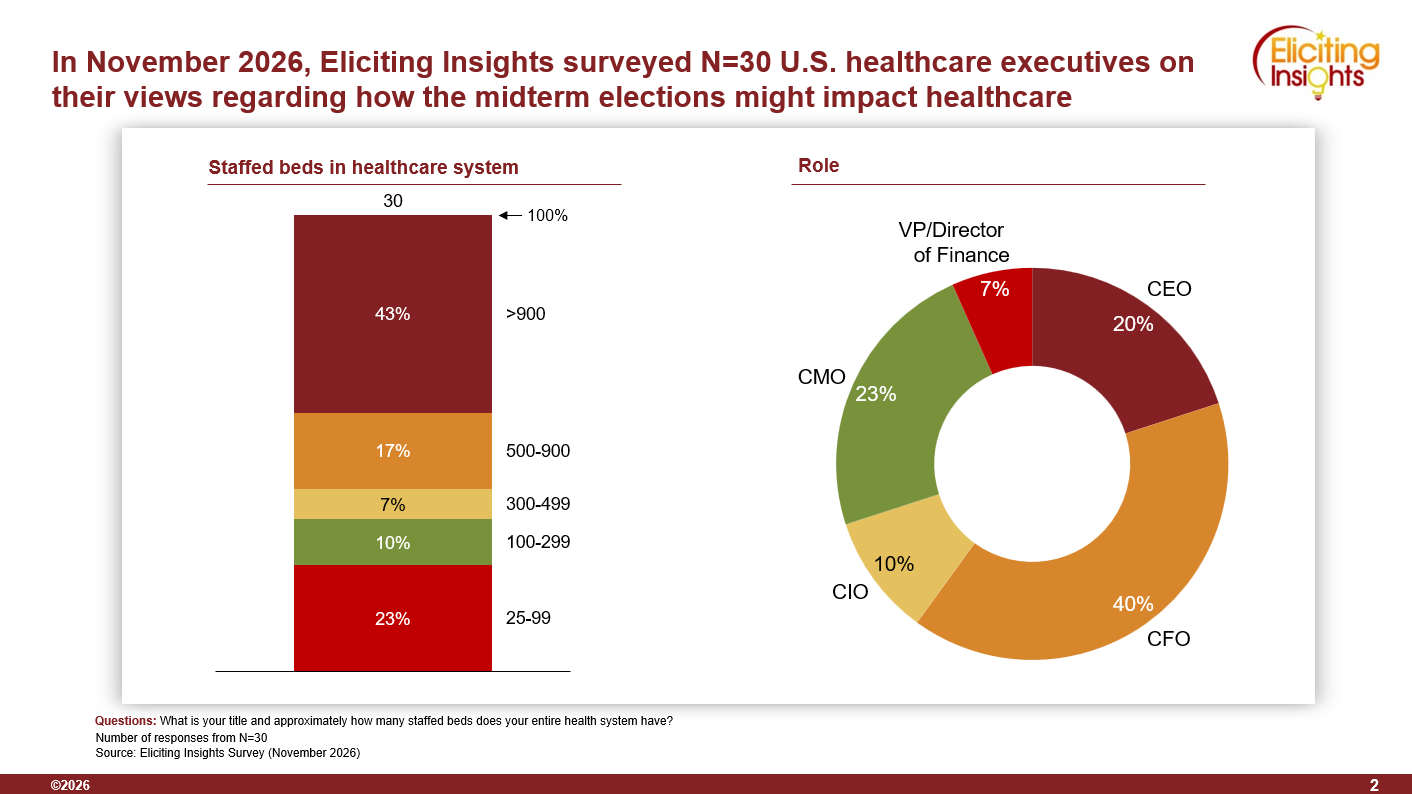
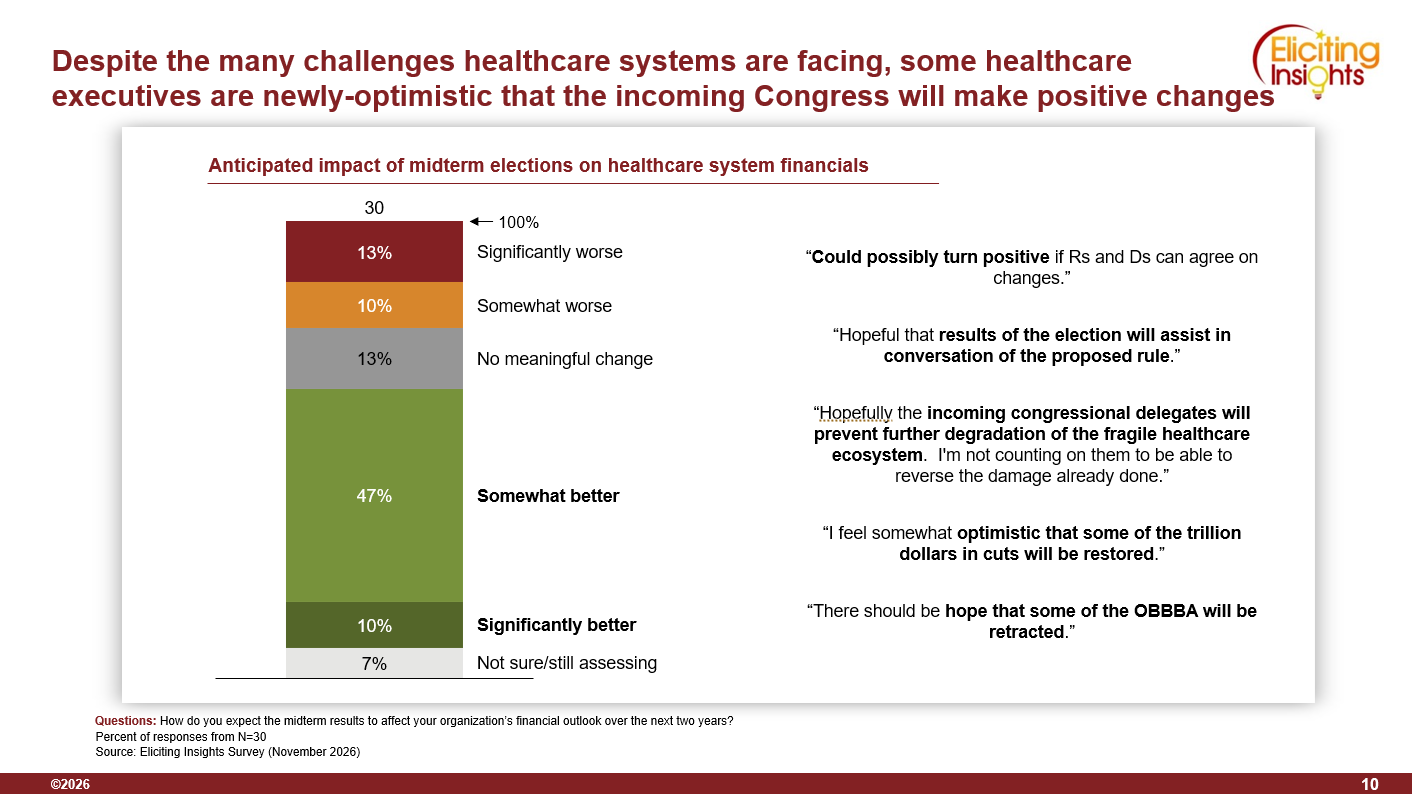
Now, after the 2026 midterm elections, we returned to healthcare leadership to see how the political landscape has shifted industry expectations. We surveyed 30 hospital and health system executives—primarily CFOs, CEOs, and CMOs representing large systems—the survey reveals a paradox: healthcare leaders feel better about the political future, but they are preparing for immediate hits to their operational margins.
The survey results point to a clear split in how leaders view their future:
- The Political Relief: Over half (57%) expect the midterm election results will improve their financial outlook over the next two years.
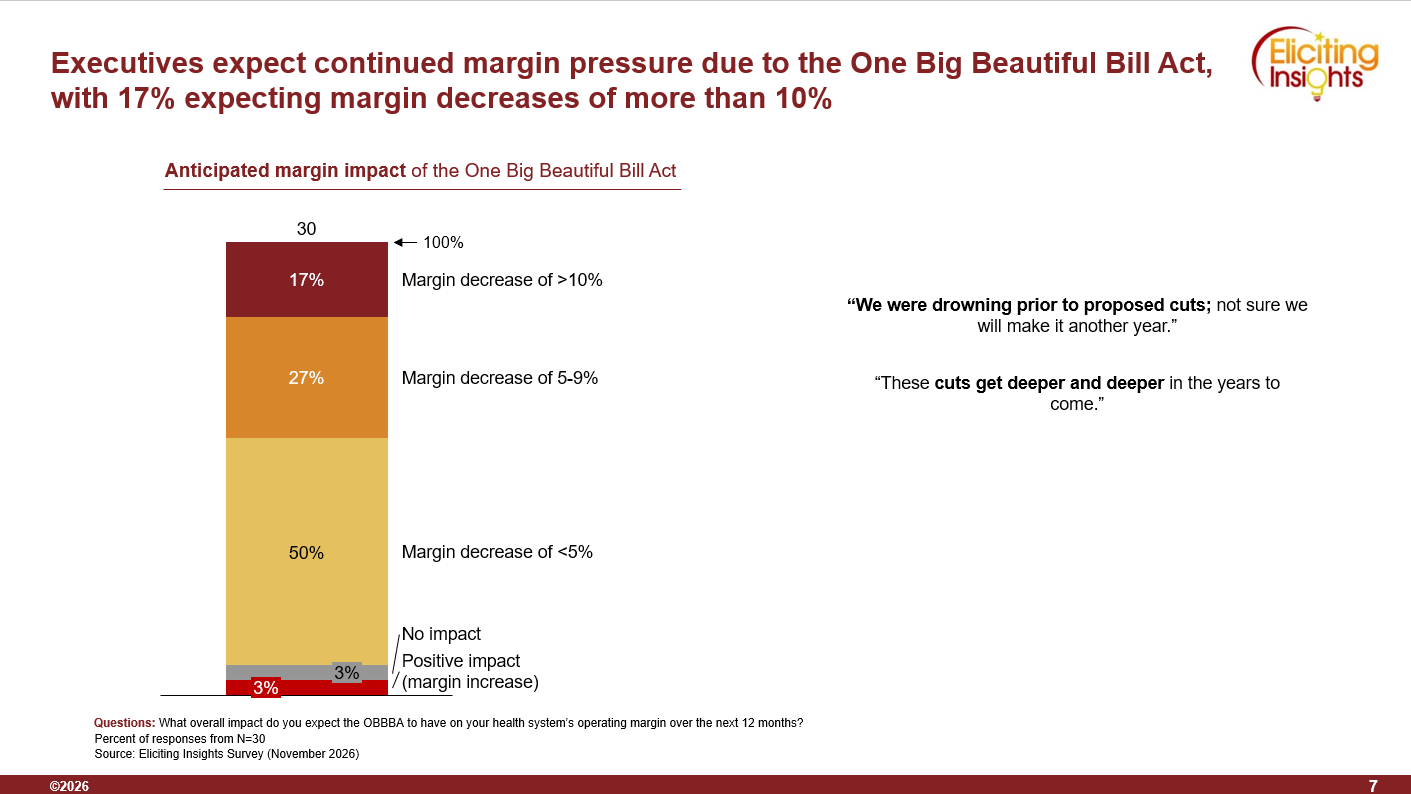
- The Operational Reality: At the same time, almost all the surveyed healthcare leaders (94%) expect the OBBBA to shrink their operating margins over the next 12 months.
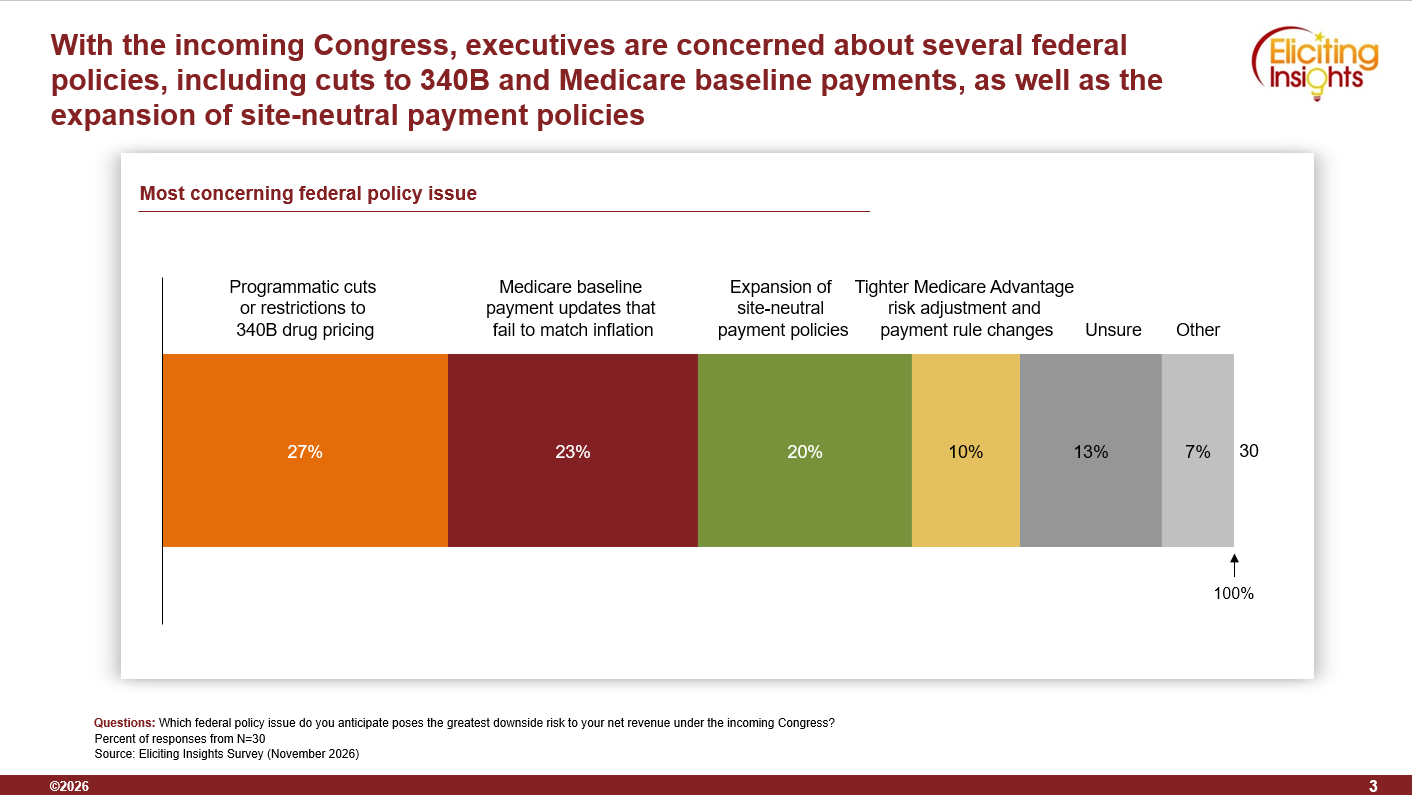
Healthcare executives are concerned about several federal policies after the midterm election–340B and Medicare baseline payments top the list.
“We were drowning prior to the proposed cuts, I’m not sure we will make it another year.” –Health System CFO
When asked which federal policy risks their revenue most under the incoming Congress, 27% of healthcare leaders pointed to cuts to the 340B drug pricing program.
Following closely, 23% named Medicare baseline payments failing to keep pace with inflation as their top financial concern.
In addition to 340B and Medicare payments, CFOs are concerned about site-neutral payment rules for clinic visits (20%) and few highlighted tighter Medicare payment rules (10%) as the most concerning policy issues.
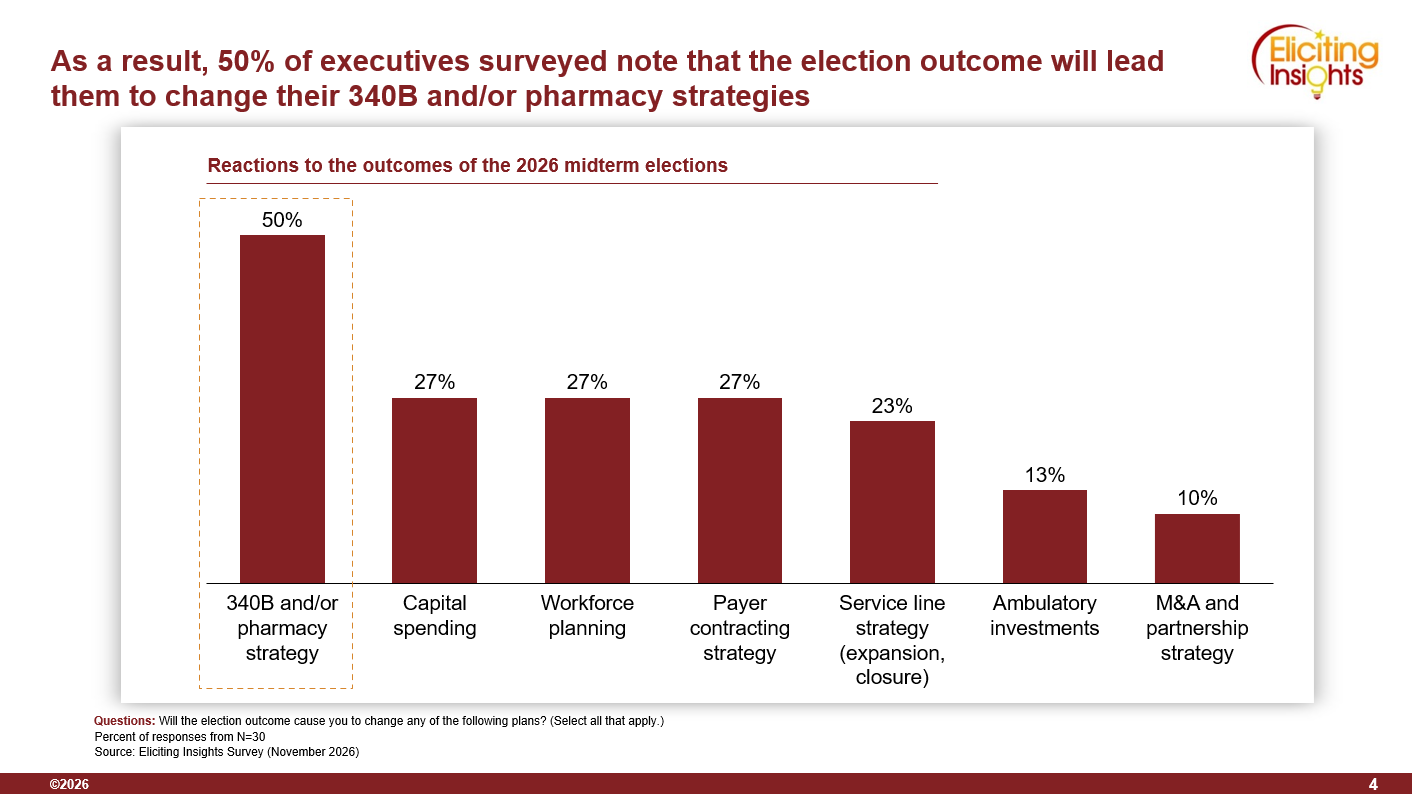
50% of surveyed leaders plan to change their pharmacy and 340B strategies due to the election outcome.
With the post-midterm political shift in Washington, healthcare leaders recognize that 340B regulatory changes and payment pressures remain on the horizon. As a result, half of all surveyed executives (50%) are actively altering their pharmacy and 340B strategies.
That focus outpaces all other operational priorities by nearly two-to-one.
In addition to pharmacy modifications, CFOs are splitting focus across capital and operational levers: 27% of leaders plan shifts in capital spending, health plan contracting, and workforce management. Fewer executives expect immediate changes
to service line offerings (23%), ambulatory footprints (13%), or merger activity (10%).
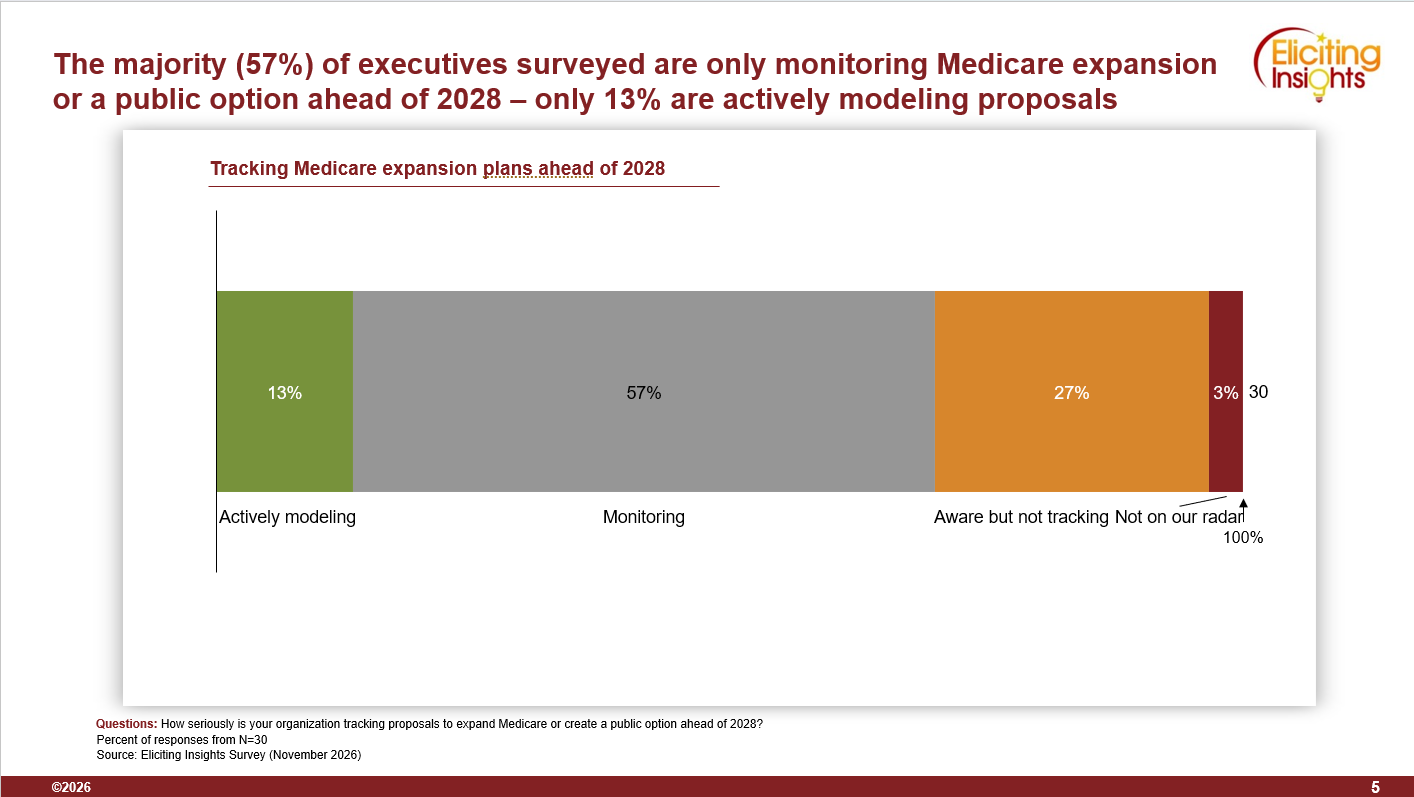
Healthcare Executives Prefer Monitoring Over Modeling for Potential 2028 Healthcare Reforms
Over half of surveyed executives (57%) are taking a wait-and-see approach to potential 2028 Medicare expansion and public option proposals, while just 13% are actually running the numbers to prepare for them.
- 57% are monitoring public option and Medicare expansion proposals.
- 13% are actively running financial models on them.
- 27% are aware of them but not tracking closely.
- Only 3% say the topic is off their radar.
Altogether, the majority (70%) of health system leaders are keeping an eye on public option proposals, recognizing that today’s midterm shift could set the stage for broader changes by 2028.
Biggest ‘Big Beautiful Bill’ Requirement Concern: Semi-Annual Redeterminations and Retroactive Medicaid Cuts
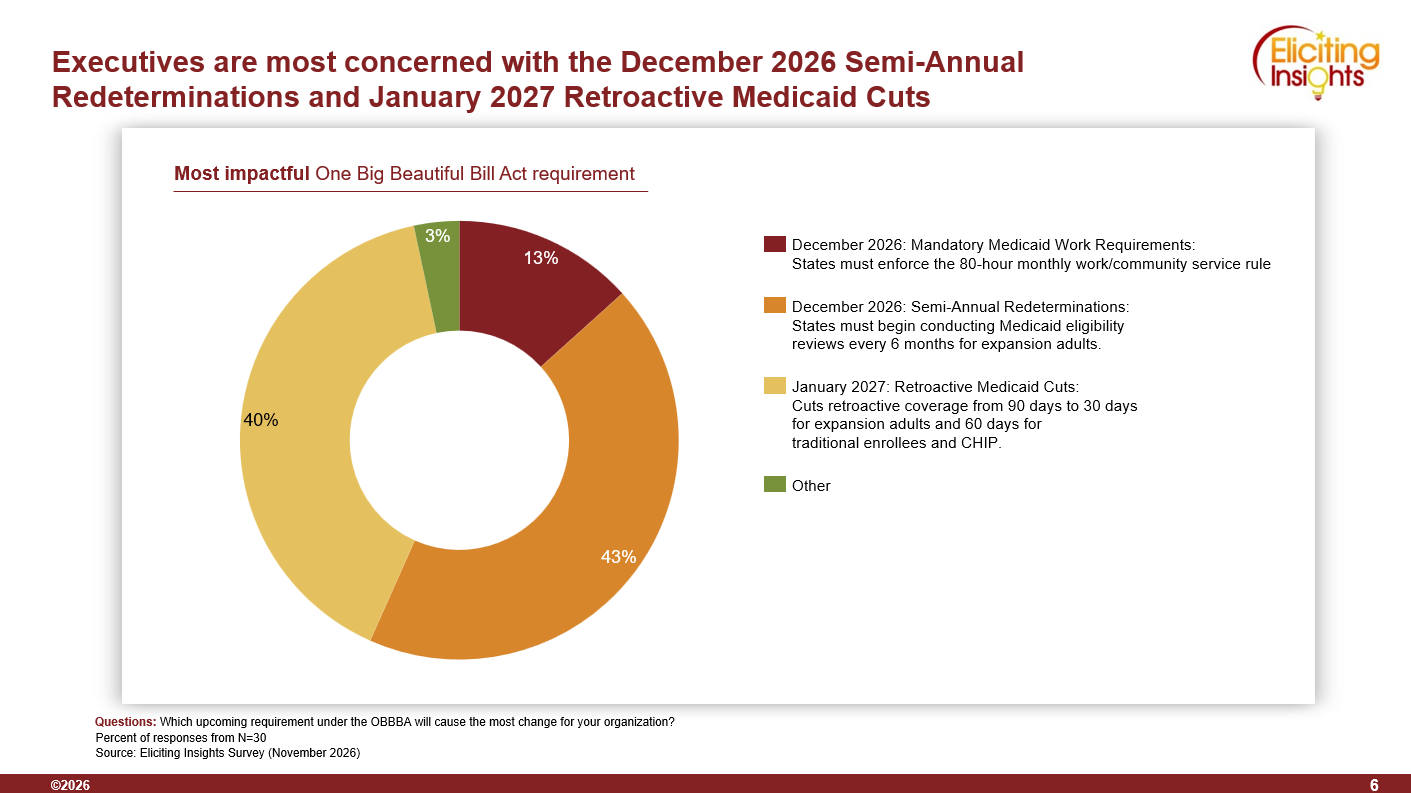
When asked which upcoming OBBBA changes will create the biggest financial disruption for their health system, hospital leaders ranked Medicaid enrollment renewals and retro coverage rules as top concerns:
- 6-month Medicaid renewals (starting Dec 2026): 43%
- Shortening retroactive Medicaid coverage to 30 days (starting Jan 2027): 40%
- Mandatory Medicaid work rules (starting Dec 2026): 13%
How Tighter Rules Combine to Reduce Coverage and Payments
Healthcare executives recognize that work requirements, shorter renewal windows, and reduced retro coverage create a dual threat. Combined, tighter renewal timelines and work rules make it significantly harder for eligible patients to gain and keep coverage, while shrinking retroactive coverage directly reduces hospital reimbursements for care already provided.
When coverage gaps occur—whether from paperwork errors, eligibility hurdles, or reduced back-coverage—hospitals are left absorbing the full cost of that care.
‘Big Beautiful Bill’ Anticipated Impact: Patient Care
Executives remain deeply concerned about how coverage disruptions and tighter budgets will affect community care.
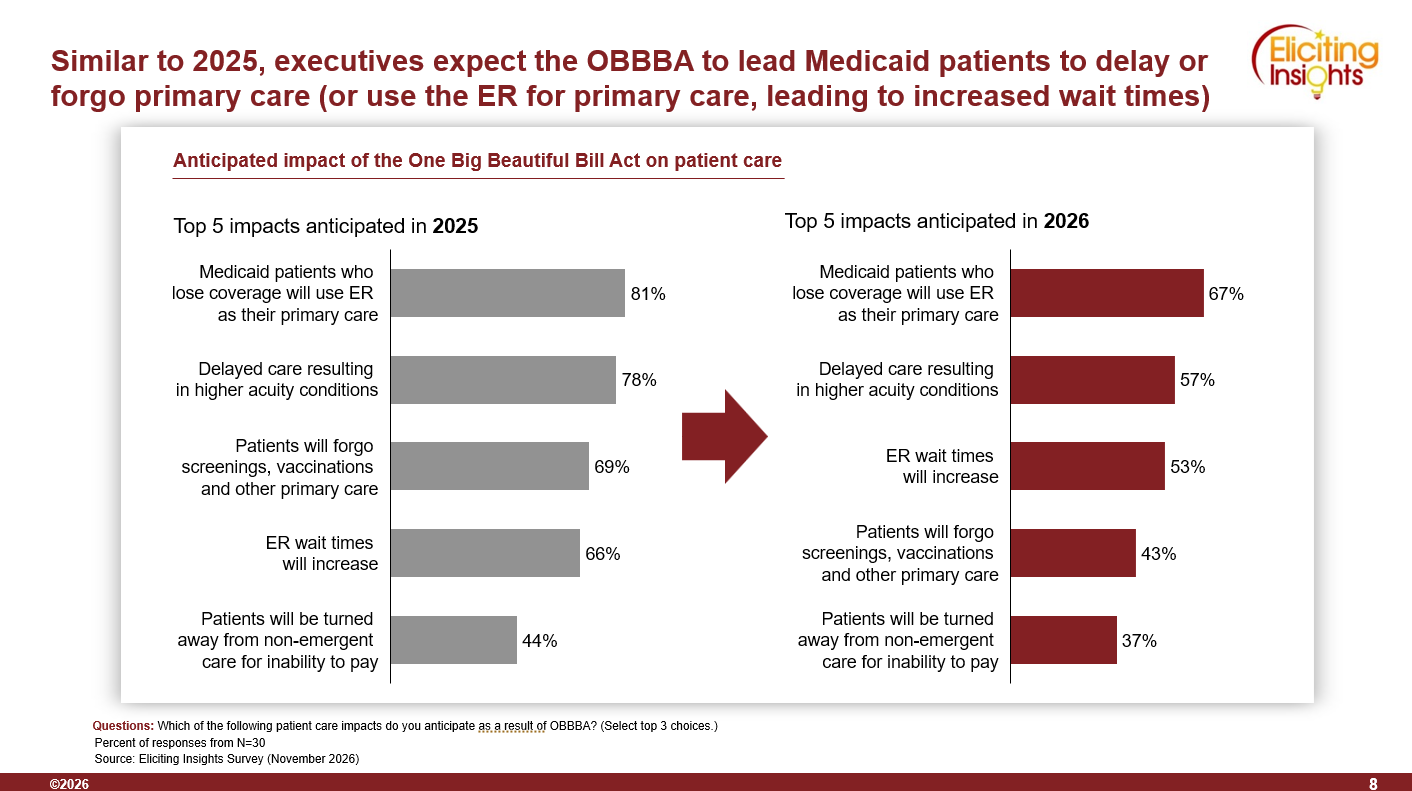
While these anxieties peaked in 2025, they remain high in 2026 even as percentages have shifted downward.
The proportion of leaders expecting former Medicaid patients to use the ER for primary care dropped from 81% to 67%, while concerns over delayed care fell from 78% to 57%, and fears of longer overall ER wait times decreased from 66% to 53%.
‘Big Beautiful Bill’ Anticipated Impact: Health Systems
“My rural hospital is living this right now. We are converting to critical access and de-licensing beds in order to increase our reimbursement amounts just to try to make ends meet.” –CIO, Rural Hospital
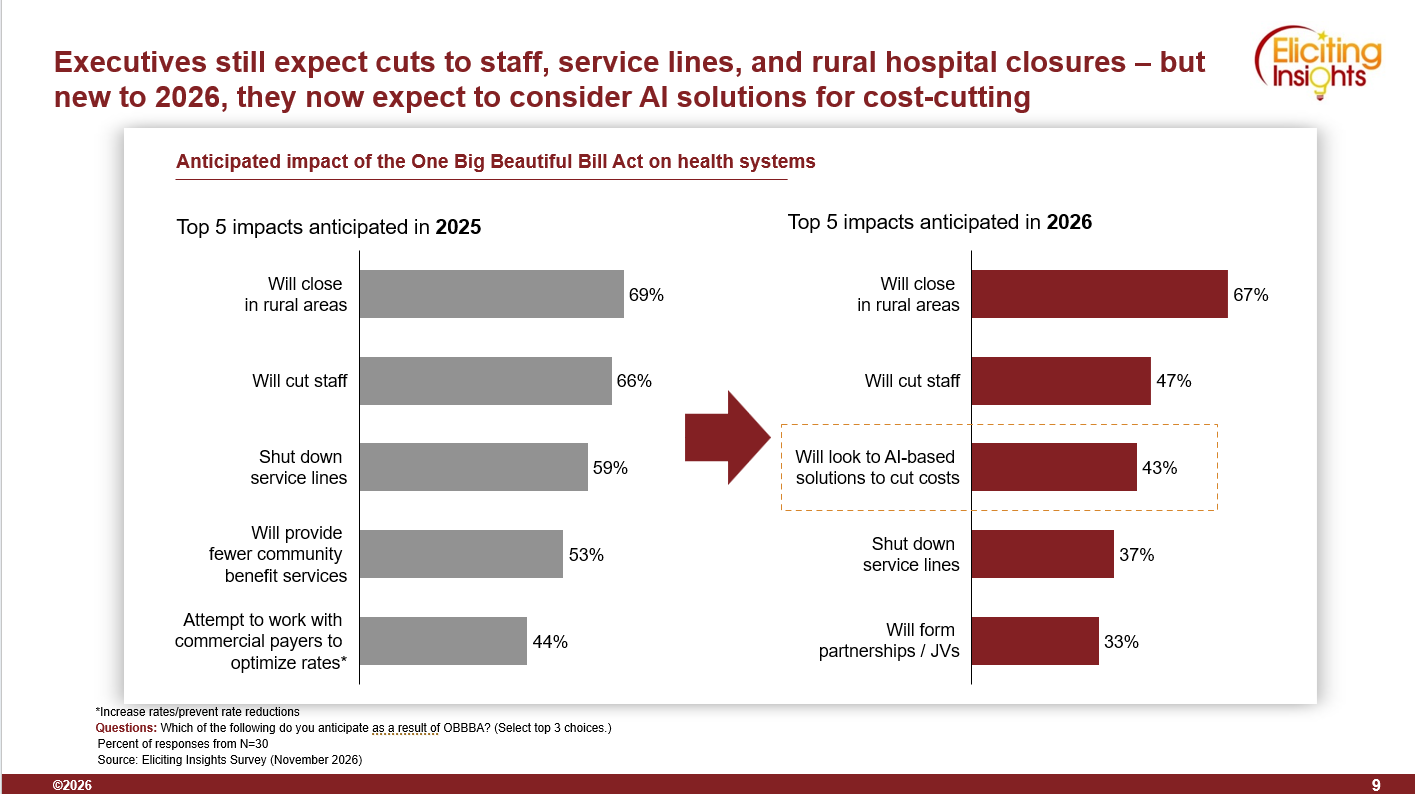
When the OBBBA passed in July 2025, hospital leaders anticipated severe operational fallout, with widespread fears of rural hospital closures (69%), staff cuts (66%), and reduced service lines (59%).
Today, those concerns remain high, even as overall pressure has softened slightly.
Rural closures stay top-of-mind for 67% of executives, while nearly half (47%) still plan to cut jobs. To manage these ongoing budget pressures, 43% of health systems are now turning to AI solutions alongside traditional service and staffing cuts.
Conclusion
While health system leaders feel a bit more hopeful after the midterms, they are bracing for dual financial hits—expecting margin pressure from both the OBBBA and impending 340B drug program cuts. Instead of relying on job cuts, executives are turning to AI, strategic partnerships, and updated pharmacy strategies to protect their bottom line, keep care open to patients, and prepare for bigger policy changes ahead.